
Guide to essential oils

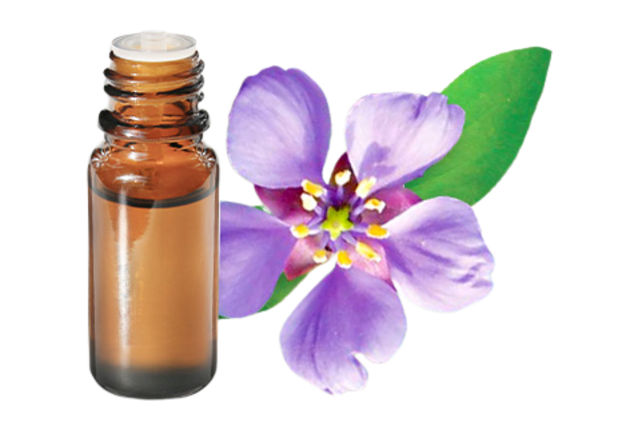
Essential oil of Guaiac wood

Guaiac wood essential oil has toning properties and is known for giving your legs a feeling of lightness. Guaiac wood essential oil has a sweet, woody scent that is highly prized for scenting skin care products. When diffused, diluted in another oil, Guaiac wood essential oil releases a bewitching exotic and sensual fragrance.

How to use

  • Skin application and massage

    Skin application and massage

    Appropriate

  • Cosmetic active ingredient

    Cosmetic active ingredient

    Appropriate

  • Diffusion

    Diffusion

    Possible but not recommended

  • Food grade

    Food grade

    Possible but not recommended

  • Aromatherapy bath

    Aromatherapy bath

    Possible but not recommended

Features

Properties and uses

Precautions

Find out more

Features

Production process

Complete steam distillation

Part of the plant used

Wood

Botanical name

Bulnesia sarmientoi

Warning

The properties, information and methods of use below are quotes from reference books or websites on aromatherapy, hydrolatherapy and phytotherapy. This general information is provided for informative purposes only and in no way constitutes medical guidance. Under no circumstances can this information be used as a substitute for a medical diagnosis, consultation or follow-up, nor can it incur our liability. We recommend that you consult the guide to essential oils before using them, so that you are aware of any precautions that need to be taken. If in doubt, consult a doctor before using essential oils.

Properties and uses

Guaiac Wood essential oil is traditionally used for : Heavy legs, Varicose veins

Health

Fragrance

Find out more

Properties

In health, guaiac wood essential oil is recognised for the following properties:

  • Stimulating

  • Venous and lymphatic****decongestant

Uses

It is traditionally used to improve the following situations:

  • Asthenia

  • Pelvic congestion, varicose veins, haemorrhoids

In practice

This oil is solid at room temperature and does not flow easily through the dropper cap. To make it easier to use and measure, we recommend that you :

  • Warm your bottle slightly under a stream of hot water to thin the oil (bringing it to around 40°C).

  • Remove the plastic cap (keep it in case you need to transport your bottle).

  • Draw up and measure out the oil using a graduated pipette , as you will find on our "empty bottles" page.

Precautions

  • Do not use during pregnancy or breastfeeding, or on children.

  • As a general rule, always test-apply your mixture in the crease of the elbow at least 48 hours before use.

Find out more

With its Latin origin lignum vitae meaning " wood of life ", guaiac wood isone of the densest of the tropical woods. This very hard, heavy wood is used in a wide variety of applications. It is used in the manufacture of furniture, certain parts for boats, wooden games (in particular for making " bourles ", wooden discs used in a game still played in the north of France) and jewellery.

The resin provided by the wood is the traditional reagent for testing for oxidases and peroxidases.

Equivalents

Essential Oils

1 ml = approximately 35 drops (with our Aroma-Zone dropper caps)

Carrier oils

1 pump (Aroma-Zone aluminium pump) = approx. 0.15 ml

Mass / Volume conversion (for a liquid)

Mass (g) = Density x Volume (ml) at 20°C

Further information

1 full teaspoon = between 3 and 4.5 ml

1 full tablespoon = between 7.5 and 10 ml


However, these spoon ratios depend on a number of factors (e.g. viscosity of the liquid, temperature, depth and size of the spoon, rheological behaviour of the liquid), and we strongly advise you to use precise measuring equipment, such as graduated test tubes, graduated pipettes, and precision scales.

Bibliography

1

"Aromatherapy exactly"

P. Franchomme, R. Jollois and D. Pénoël

2

'L'ABC des huiles essentielles'

Dr Telphon

3