Guide to essential oils

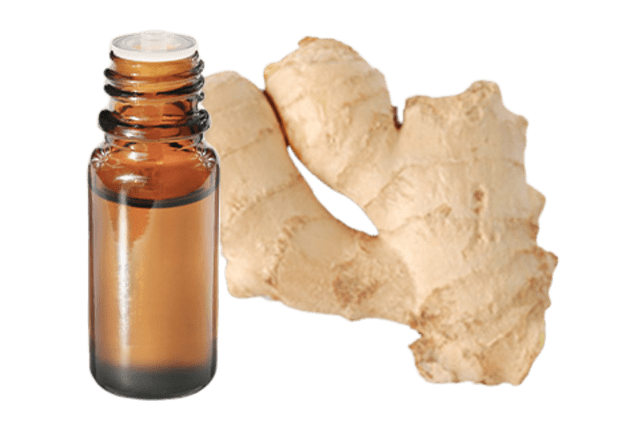
Essential oil of Ginger

Ginger essential oil is reputed to be an aphrodisiac and general tonic. Ginger essential oil is also known to help with motion sickness, when inhaled on a handkerchief. Ginger essential oil adds a fresh, spicy fragrance to skincare products, which blends perfectly with citrus fruit.

How to use

  • Skin application and massage

    Skin application and massage

    Suitable

  • Aromatherapy bath

    Aromatherapy bath

    Suitable

  • Food grade

    Food grade

    Appropriate

Features

Properties and uses

Precautions

Find out more

Features

Production process

Steam distillation

Part of the plant used

Dried roots (rhizomes)

Botanical name

Zingiber officinalis

Warning

The properties, information and methods of use below are quotes from reference books or websites on aromatherapy, hydrolatherapy and phytotherapy. This general information is provided for informative purposes only and in no way constitutes medical guidance. Under no circumstances can this information be used as a substitute for a medical diagnosis, consultation or follow-up, nor can it incur our liability. We recommend that you consult the guide to essential oils before using them, so that you are aware of any precautions that need to be taken. If in doubt, consult a doctor before using essential oils.

Properties and uses

Aroma-Zone Ginger essential oil is traditionally used for: Constipation, fever, erectile dysfunction, motion sickness, vomiting, nausea.

Health

Wellness

Find out more

Properties

Ginger essential oil is renowned for the following health benefits:

  • Aperitif, supports digestion, relieves gas

  • Analgesic, anti-inflammatory

  • Antinausea and anti-vomiting

  • Antitussive, antispasmodic

Uses

As a complement to treatment, it is traditionally used in the following cases:

  • Poor digestion, lack of appetite, flatulence, constipation

  • Pain, rheumatism

  • Nausea, motion sickness

  • Bronchitis

Synergies

As a complement to treatment, it is traditionally used in the following cases:

  • <0>Poor digestion, lack of appetite, flatulence, constipation

    <0>Pain, rheumatism

    <0>Nausea, motion sickness

    <2><0>Bronchitis

<0>

In practice

Soothe sore areas: Mix into your oil blend. Lightly massage the blend into the affected area.

Respiratory comfort: Mix in your oil blend. Massage or rub your blend into the chest and upper back.

Poor digestion: Mix into your oil blend. Massage or rub the blend into the abdomen.

Precautions

  • Avoid during the first 3 months of pregnancy.

  • May cause skin irritation. Always dilute well before applying to the skin.

  • Keep out of reach of children.

  • Avoid contact with eyes.

  • Certain natural compounds contained in this essential oil may present a risk of allergy in certain sensitive individuals when the essential oil is incorporated into a cosmetic composition (according to the 7th Amendment of the European Directive on cosmetic products (2003/15/EC)): limonene, linalool, citral (geranial and neral), geraniol.

  • As a general rule, always test-apply your mixture on the crease of the elbow at least 48 hours before use.

Find out more

The therapeutic and culinary virtues of ginger have been known and used for a long time. Originally from Asia, where it was found around three millennia ago, it was imported into ancient Egypt, where it was used for mummification.

It was used in cooking and for its digestive properties by the Greeks and Romans. Its aphrodisiac properties were also widely used in the Middle Ages.

Equivalents

Essential Oils

1 ml = approximately 35 drops (with our Aroma-Zone dropper caps)

Carrier oils

1 pump (Aroma-Zone aluminium pump) = approx. 0.15 ml

Mass / Volume conversion (for a liquid)

Mass (g) = Density x Volume (ml) at 20°C

Further information

1 full teaspoon = between 3 and 4.5 ml

1 full tablespoon = between 7.5 and 10 ml


However, these spoon ratios depend on a number of factors (e.g. viscosity of the liquid, temperature, depth and size of the spoon, rheological behaviour of the liquid), and we strongly advise you to use precise measuring equipment, such as graduated test tubes, graduated pipettes, and precision scales.

Bibliography

1

"Huiles essentielles - 2000 ans de découvertes aromathérapeutiques pour une médecine d'avenir"

Dominique Baudoux

2

"Aromatherapy"

Dr Jean Valnet - Éditions Maloine

3

'L'aromathérapie exactement'

P. Franchomme and Dr D. Pénoël

4

'La bible de l'aromathérapie'

Nerys Purchon

5

'L'ABC des huiles essentielles'

Dr Telphon

6

"Aromatherapy"

Nelly Grosjean

7

'Les huiles essentielles pour votre santé'

G. Roulier

8

"Les cahiers pratiques de l'aromathérapie française" - Paediatrics

Dominique Baudoux - Editions Amyris

9

Aroma-News newsletters

NARD Association

10

'Aromatherapy - Healing with essential oils'

Dominique Baudoux - Editions Amyris

11

Cupillard E. et V. (2006) Cuisiner avec les huiles essentielles et les eaux florales.

Editions La Plage

12