
Guide to essential oils

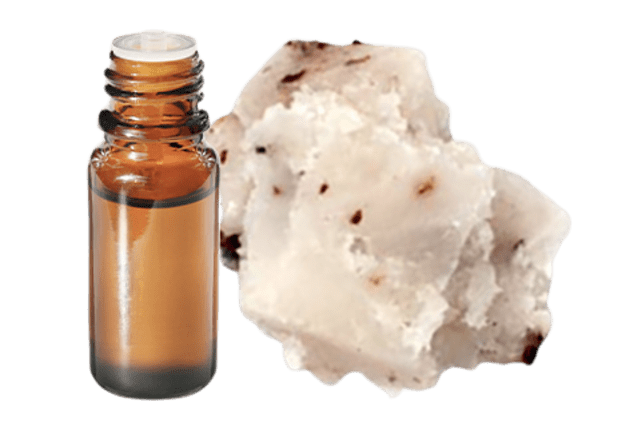
Essential oil of Elemi

In the Middle Ages, Elemi resin was used to treat hunched backs. Elemi essential oil has revitalising properties and is used in skin repair treatments. Elemi essential oil is also a fabulous oil for refocusing and harmonising energies.

How to use

  • Skin application and massage

    Skin application and massage

    Suitable

  • Diffusion

    Diffusion

    Suitable

  • Food grade

    Food grade

    Possible but not recommended

  • Aromatherapy bath

    Aromatherapy bath

    Appropriate

  • Cosmetic active ingredient

    Cosmetic active ingredient

    Possible but not recommended

Features

Properties and uses

Precautions

Find out more

Features

Production process

Complete steam distillation

Part of the plant used

Gum

Botanical name

Canarium luzonicum

Warning

The properties, information and methods of use below are quotes from reference books or websites on aromatherapy, hydrolatherapy and phytotherapy. This general information is provided for informative purposes only and in no way constitutes medical guidance. Under no circumstances can this information be used as a substitute for a medical diagnosis, consultation or follow-up, nor can it incur our liability. We recommend that you consult the guide to essential oils before using them, so that you are aware of any precautions that need to be taken. If in doubt, consult a doctor before using essential oils.

Properties and uses

Elemi essential oil is traditionally used for: pressure sores, back pain

Health

Wellness

Find out more

Properties

Elemi essential oil is recognised for its health benefits:

  • Wound healing

  • Antiseptic and anti-amoebic

  • Stimulates stomach function and promotes healthy digestion

Uses

It is traditionally used to help improve the following conditions:

  • Chronic wounds, scaly skin, abscesses, scars, skin inflammation, and pressure sores

  • Dyspepsia, spasmodic enterocolitis, diarrhoea, amoebiasis, and intestinal cramps

  • Bronchitis

  • Hunched backs and scoliosis: traditionally known to help relieve blockages, particularly in the cervical area, and to improve posture.

In practice

Regenerating for scarred areas: mix into your oil formulation. Apply the mixture to the area concerned.

Digestive health: mix into your oil formulations. Massage or rub the mixture into your abdomen.

Back health, hunched backs: mix into your oil formulation. Massage the mixture along the spine and nape of the neck.

Precautions

  • Do not use if pregnant or breastfeeding.

  • Keep out of reach of children.

  • Avoid prolonged use without medical advice. Internal use should be rare and reserved for professionals.

  • Some natural compounds found in this essential oil may pose an allergy risk for sensitive individuals when the essential oil is incorporated into cosmetic formulations (according to the 7th Amendment of the European Cosmetics Directive (2003/15/EC)): limonene, and to a lesser extent, eugenol.

  • As a general rule, always perform a patch test of your formulation on the crook of your elbow at least 48 hours before using it.

Find out more

The Elemi or Canarium luzonicum belongs to the Burseraceae family. This large tree is native to the Philippines. It exudes a natural resin that resembles honey. This resin appears when the first leaf sprouts, solidifies upon contact with air, and stops flowing when the last leaf falls. Known and used for thousands of years, this resin was employed to embalm the dead during the time of the Egyptians.

In the Middle Ages, it was known for its healing properties and was used in the form of balms.

Equivalents

Essential Oils

1 ml = approximately 35 drops (with our Aroma-Zone dropper caps)

Carrier oils

1 pump (Aroma-Zone aluminium pump) = approx. 0.15 ml

Mass / Volume conversion (for a liquid)

Mass (g) = Density x Volume (ml) at 20°C

Further information

1 full teaspoon = between 3 and 4.5 ml

1 full tablespoon = between 7.5 and 10 ml


However, these spoon ratios depend on a number of factors (e.g. viscosity of the liquid, temperature, depth and size of the spoon, rheological behaviour of the liquid), and we strongly advise you to use precise measuring equipment, such as graduated test tubes, graduated pipettes, and precision scales.

Aromatherapy recipes from the bibliography

EO = Essential Oil VO = Carrier Oil or Macerated Oil

Painful, tense neck and cervical spine (L. Bosson)

Health & wellbeingMuscles and joints

  • 8 drops Elemi essential oil

  • 2 drops Peppermint essential oil

  • 1 drop Frankincense essential oil

Use: massage into painful areas.

Ringing in the Ears (L. Bosson)

Health & wellbeingVarious

  • 1 drop of Elemi essential oil

  • 1 drop of Hyssop Decumbens essential oil

Use : on a cotton bud, apply gently to the ear.

Please note: DO NOT INSERT COTTON BUDS INTO YOUR EAR CANAL.

Fear of the Unknown, Fear of Acting Out, Apprehension (L. Bosson)

Health & wellbeingVarious

Use: massage the neck with a few drops of Elémi essential oil and inhale the aroma straight from the bottle.

Bibliography

1

"Huiles essentielles - 2000 ans de découvertes aromathérapeutiques pour une médecine d'avenir"

Dominique Baudoux

2

"Aromatherapy"

Dr Jean Valnet - Éditions Maloine

3

'L'aromathérapie exactement'

by P. Franchomme and Dr D. Pénoël

4

'La bible de l'aromathérapie'

Nerys Purchon

5

'L'ABC des huiles essentielles'

Dr Telphon

6

'Aromatherapy'

Nelly Grosjean

7

'Les huiles essentielles pour votre santé'

G. Roulier

8

'Les cahiers pratiques de l'aromathérapie française - Pédiatrie'

Dominique Baudoux - Editions Amyris

9

Aroma-News newsletters from the NARD association

10

'Aromatherapy - Healing with essential oils'

Dominique Baudoux - Editions Amyris

11

'L'aromathérapie énergétique'

Lydia Bosson - Editions Amyris