
Guide to essential oils

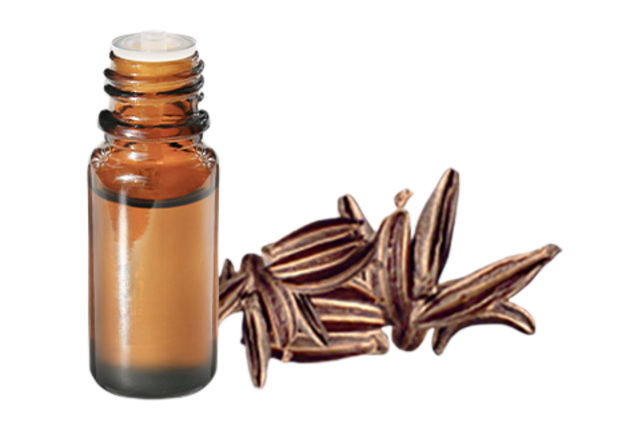
Essential oil of Caraway

Caraway seeds have long been used to aid digestion and combat gas. The warm, spicy-smelling essential oil made from them is often recommended in cases of digestive discomfort or respiratory discomfort.

How to use

  • Skin application and massage

    Skin application and massage

    Appropriate

  • Cosmetic active ingredient

    Cosmetic active ingredient

  • Aromatherapy bath

    Aromatherapy bath

  • Food grade

    Food grade

    Appropriate

  • Diffusion

    Diffusion

Features

Properties and uses

Precautions

Find out more

Features

Production process

Complete steam distillation

Part of the plant used

Seeds

Botanical name

Carum carvi

Warning

The properties, information and methods of use below are quotes from reference books or websites on aromatherapy, hydrolatherapy and phytotherapy. This general information is provided for informative purposes only and in no way constitutes medical guidance. Under no circumstances can this information be used as a substitute for a medical diagnosis, consultation or follow-up, nor can it incur our liability. We recommend that you consult the guide to essential oils before using them, so that you are aware of any precautions that need to be taken. If in doubt, consult a doctor before using essential oils.

Properties and uses

Caraway essential oil is traditionally used for: Aerophagia, bloating and flatulence, bronchitis, poor digestion, chesty cough.

Health

Kitchen

Find out more

Properties

For health, Caraway essential oil is recognised for the following properties:

  • Helps to clear the respiratory tract.

  • As a cholagogue, it facilitates the evacuation of bile into the intestine.

  • Choleretic, it stimulates the secretion of bile by the liver.

  • As an aperitif and digestive, it helps eliminate gas and relieves intestinal spasms.

Uses

In addition to treatments, it is traditionally recommended in the following cases:

  • Catarrhal bronchitis, chesty coughs

  • Aerophagia, flatulence, bloating

  • Poor appetite, indigestion, digestive disorders, dysbiosis (imbalance of intestinal flora)

Synergies

  • Digestive comfort: Nutmeg, Coriander and Cumin essential oils

  • Culinary preparations: Anise, Fennel and Cumin essential oils

In practice

Respiratory comfort: blend into your oil blend. Massage or rub your blend into the chest and upper back.

Poor digestion: Mix with your oil blend. Massage or rub the mixture into the abdomen.

Precautions

  • Not for use when pregnant or breastfeeding, in children, in those with epilepsy or sensitive elderly people (contains ketones with neurotoxic and abortifacient properties).

  • For internal use only in limited doses over short periods, on the advice of a therapist.

  • Irritating to the skin in its pure state, always dilute well for cutaneous use.

  • Not recommended in cases of mastosis or hormone-sensitive cancer (breast, ovary, endometrium) due to its oestrogen-like effect.

  • Keep out of reach of children.

  • Avoid contact with the eyes.

  • Certain natural compounds contained in this essential oil may present a risk of allergy for some sensitive individuals when the essential oil is incorporated into a cosmetic composition (in accordance with the 7th Amendment to the European Cosmetics Directive (2003/15/EC)): limonene.

  • As a general rule, always carry out a test application of your mixture in the crease of the elbow at least 48 hours before using it.

Find out more

Could this cousin of the cumin seed be the oldest spice used in Europe? Caraway seeds have certainly been found in prehistoric dwellings. The Egyptians placed a jar of it in tombs to ward off evil spirits. In the Middle Ages, this spice was used in love potions.

It makes many foods easier to digest and more flavoursome, which is why it is so widely used in the food industry, or in cooking, as an addition to heavy dishes such as couscous or stews.

Aromatherapy recipes from the bibliography

EO = Essential Oil VO = Carrier Oil or Macerated Oil

Bad breath (T. TELPHON)

Health & wellbeingMouth care

  • 1 drop Bay Laurel essential oil
  • 1 drop Tarragon essential oil
  • 1 drop Caraway essential oil

Directions for use: Take one drop of each essential oil at mealtimes in a teaspoonful of olive or sunflower oil, or honey, or in a few breadcrumbs. Repeat this treatment 1 or 2 times a day.

Flatulence, bloating (AROMA NEWS - NARD)

Health & wellbeing

  • 1ml Foeniculum vulgare var.dulce essential oil (Sweet Fennel)
  • 1 ml of Cumimum cymimum (Cumin) essential oil
  • 0.2 ml Cinnamomum verum essential oil (Cinnamon bark)
  • 0.8 ml Carum carvi essential oil (Caraway)
  • 1 ml of Chamaemelum nobile (Roman chamomile) essential oil
  • Supplement with 10 ml hazelnut or sesame oil

Directions for use: 4 to 6 drops on the abdomen 3 times a day.

Digestive disorders (N. GROSJEAN)

Health & wellbeing

  • 9 ml of Caraway essential oil
  • 6 ml of Nutmeg essential oil
  • 4 ml of Coriander essential oil
  • 1 ml of Cumin essential oil

Directions for use: Dilute the mixture in a little carrier oil and rub 5 drops into the stomach and abdomen after a meal.

Equivalents

Essential Oils

1 ml = approximately 35 drops (with our Aroma-Zone dropper caps)

Carrier oils

1 pump (Aroma-Zone aluminium pump) = approx. 0.15 ml

Mass / Volume conversion (for a liquid)

Mass (g) = Density x Volume (ml) at 20°C

Further information

1 full teaspoon = between 3 and 4.5 ml

1 full tablespoon = between 7.5 and 10 ml


However, these spoon ratios depend on a number of factors (e.g. viscosity of the liquid, temperature, depth and size of the spoon, rheological behaviour of the liquid), and we strongly advise you to use precise measuring equipment, such as graduated test tubes, graduated pipettes, and precision scales.

Bibliography

1

'Huiles essentielles - 2000 ans de découvertes aromathérapeutiques pour une médecine d'avenir'

Dominique Baudoux

2

'The Practice Of Aromatherapy'

Dr Jean Valnet - Éditions Maloine

3

'L'Aromathérapie exactement'

P. Franchomme and Dr D. Pénoël

4

'La bible de l'aromathérapie'

Nerys Purchon

5

'L'ABC des huiles essentielles'

Dr Telphon

6

'Aromatherapy'

Nelly Grosjean

7

'Les huiles essentielles pour votre santé'

G. Roulier

8

'Les cahiers pratiques de l'aromathérapie française - Pédiatrie'

Dominique Baudoux - Editions Amyris

9

Aroma-News newsletters

NARD Association

10

'Aromatherapy - Healing with essential oils'

Dominique Baudoux - Editions Amyris

11

La cuisine aux huiles essentielles - Des recettes saines et créatives

Aymeric Pataud

12

Website www.amabilia.com

13

Erligmann A. (2009) 'Les Huiles Essentielles culinaires'. Plants, Natural Flavours, Recipes. Edisud.

14

Cupillard E. and V. (2006) 'Cuisiner avec les huiles essentielles et les eaux florales'. Editions La Plage.

15