
Guide to essential oils

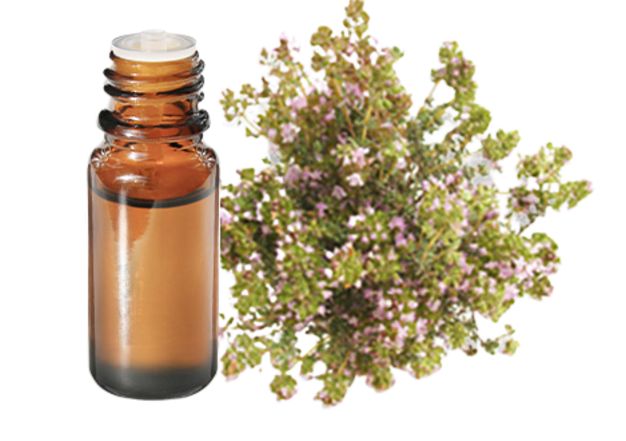
Essential oil of Breckland thyme

A powerful tonic, Breckland thyme essential oil is used in cases of physical or mental fatigue. Purifying, Breckland thyme essential oil can also be used to relieve cold spells. It is also traditionally reputed to aid digestion.

How to use

  • Skin application and massage

    Skin application and massage

    Appropriate

  • Cosmetic active ingredient

    Cosmetic active ingredient

  • Diffusion

    Diffusion

    Possible but not recommended

  • Food grade

    Food grade

    Suitable

  • Aromatherapy bath

    Aromatherapy bath

Features

Properties and uses

Precautions

Find out more

Features

Production process

Complete steam distillation

Part of the plant used

Flowering tops

Botanical name

Thymus serpyllum

Warning

The properties, information and methods of use below are quotes from reference books or websites on aromatherapy, hydrolatherapy and phytotherapy. This general information is provided for informative purposes only and in no way constitutes medical guidance. Under no circumstances can this information be used as a substitute for a medical diagnosis, consultation or follow-up, nor can it incur our liability. We recommend that you consult the guide to essential oils before using them, so that you are aware of any precautions that need to be taken. If in doubt, consult a doctor before using essential oils.

Properties and uses

Health

Wellness

Find out more

Properties

Breckland thyme essential oil is renowned for the following health benefits:

  • Powerful antiseptic

  • Supports digestion, stimulates gastric secretion.

  • Antibacterial and antiviral

  • Antifungal, antiparasitic and antimycotic

  • Diuretic

  • Helps eliminate gas.

  • Antispasmodic

  • Expectorant, cough suppressant

  • General stimulant tonic

  • Analgesic

Uses

It is traditionally used to improve the following conditions:

  • Gastric problems

  • the flu, bronchitis, coughs, asthma, superinfection

  • Cystitis, urinary tract infection

  • Infectious dermatitis, impetigo, abscesses, anthrax, panaris, dull wounds

  • Neuralgia, sciatica, lumbago

  • Osteoarthritis

In practice

Joint and digestive health: Mix into your oil blend. Massage this blend on the affected organs.

Purifying action: Mix into your mixture to make an ointment.

Precautions

  • Should not be used by pregnant or breastfeeding women or children.

  • Dermocaustic: never use undiluted on the skin. Always use well diluted for cutaneous use (max 5% for localised use).

  • Highly potent, use in low doses and for limited periods only. Oral use under therapeutic control.

  • Contraindicated in cases of hepatic insufficiency.

  • Keep out of reach of children.

  • Avoid contact with the eyes.

  • Some natural compounds in this essential oil may present an allergy risk for sensitive individuals when the oil is incorporated into a cosmetic composition (in accordance with the 7th Amendment to the European Cosmetics Directive (2003/15/EC)): limonene, linalool.

  • As a general rule, always perform a patch test of your preparation in the crease of your elbow at least 48 hours before use.

  • If used as a vapour, this powerful essential oil should be strongly diluted (max. 5%) with other milder essential oils.

Find out more

Breckland thyme or Thymus serpyllum , by its Latin name, belongs to the Lamiaceae family. Widely found around the Mediterranean, this low-growing aromatic plant grows to no more than 10 cm in height, but can be up to 50 cm wide. Perennial and creeping, it thrives in dry soil. From June to September, its foliage disappears beneath swarms of small, purple flowers. It sharessimilar properties with its cousin, Thyme , which is why it is called Breckland thyme serpolet. It is traditionally used in infusions to clear the respiratory tract, relieve poor digestion and as a general tonic.

Aromatherapy recipes from the bibliography

EO = Essential Oil VO = Carrier Oil or Macerated Oil

Cough (bronchitis, laryngitis) (T. Telphon)

Health & wellbeingRespiratory problems

  • 3 g of Lavender essential oil
  • 3 g of Breckland thyme essential oil
  • 3 g of Green myrtle essential oil
  • 30 g of Arnica carrier oil
  • 30 g of Olive carrier oil

Use: Vigorously rub your chest and back. Repeat the process 2 to 3 times a day if necessary.

Equivalents

Essential Oils

1 ml = approximately 35 drops (with our Aroma-Zone dropper caps)

Carrier oils

1 pump (Aroma-Zone aluminium pump) = approx. 0.15 ml

Mass / Volume conversion (for a liquid)

Mass (g) = Density x Volume (ml) at 20°C

Further information

1 full teaspoon = between 3 and 4.5 ml

1 full tablespoon = between 7.5 and 10 ml


However, these spoon ratios depend on a number of factors (e.g. viscosity of the liquid, temperature, depth and size of the spoon, rheological behaviour of the liquid), and we strongly advise you to use precise measuring equipment, such as graduated test tubes, graduated pipettes, and precision scales.

Bibliography

1

'Huiles essentielles - 2000 ans de découvertes aromathérapeutiques pour une médecine d'avenir'

Dominique Baudoux

2

'Aromathérapie' Éditions Maloine

Dr Jean Valnet

3

'L'Aromathérapie exactement'

P. Franchomme and Dr D. Pénoël

4

'La bible de l'aromathérapie'

Nerys Purchon

5

'L'ABC des huiles essentielles'

Dr Telphon

6

'Aromatherapy'

Nelly Grosjean

7

'Les huiles essentielles pour votre santé'

G. Roulier

8

'Les cahiers pratiques de l'aromathérapie française - Dermatologie' - Editions Amyris

Dominique Baudoux

9

Aroma-News newsletters

The NARD association

10

'Aromatherapy - Healing with essential oils'

Dominique Baudoux - Editions Amyris